Last Updated on November 3, 2026
If you are ordering a hair detox product for a hair follicle drug test, three things decide whether the order helps you: the product matches your drug history, it arrives with enough time to finish every wash, and you protect clean hair afterward with clean towels, combs and bedding. Order early, work out your required number of washes before you pay, and treat the days after each wash as part of the process, not an afterthought.
This guide walks through how to choose, when to order, what to do on wash day, and what to do with towels and pillowcases. It is written for people with a real test on the calendar, not for anyone shopping for a salon-style clarifying shampoo.
TL;DR
- A hair drug test looks back about 90 days, so the right product depends on what you used, when you last used it and how often.
- Order before you need it. Shipping delays and a missed wash cost more than a few days of waiting.
- Use the required-washes calculator logic before you buy: substance, date of last use and 90-day frequency set the number of washes.
- Use a fresh towel, a clean comb and a freshly washed pillowcase after each wash, and keep the scalp free of irritation.
- If you are unsure about timing or heavy use, a personal phone consultation costs $100 and settles it before you order.
Table of Contents
- What “hair detox” means when you have a drug test
- Which product to order
- Work out your washes before you check out
- When to order
- Wash day: order of steps
- Clean towels, combs and bedding
- Sleeping after a hair detox
- Scalp comfort and safety
- A note on rehab and monitored testing
- Our perspective
- Ready to order
- FAQ
- Sources
What “hair detox” means when you have a drug test
Search for hair detox and most results are about beauty: build-up from styling products, hard water, oily scalps. That is a different job from preparing for a drug screen. A drug-test hair detox is a structured series of washes meant to cleanse hair before a lab looks at it, and it follows a protocol with a set number of steps and a set order.
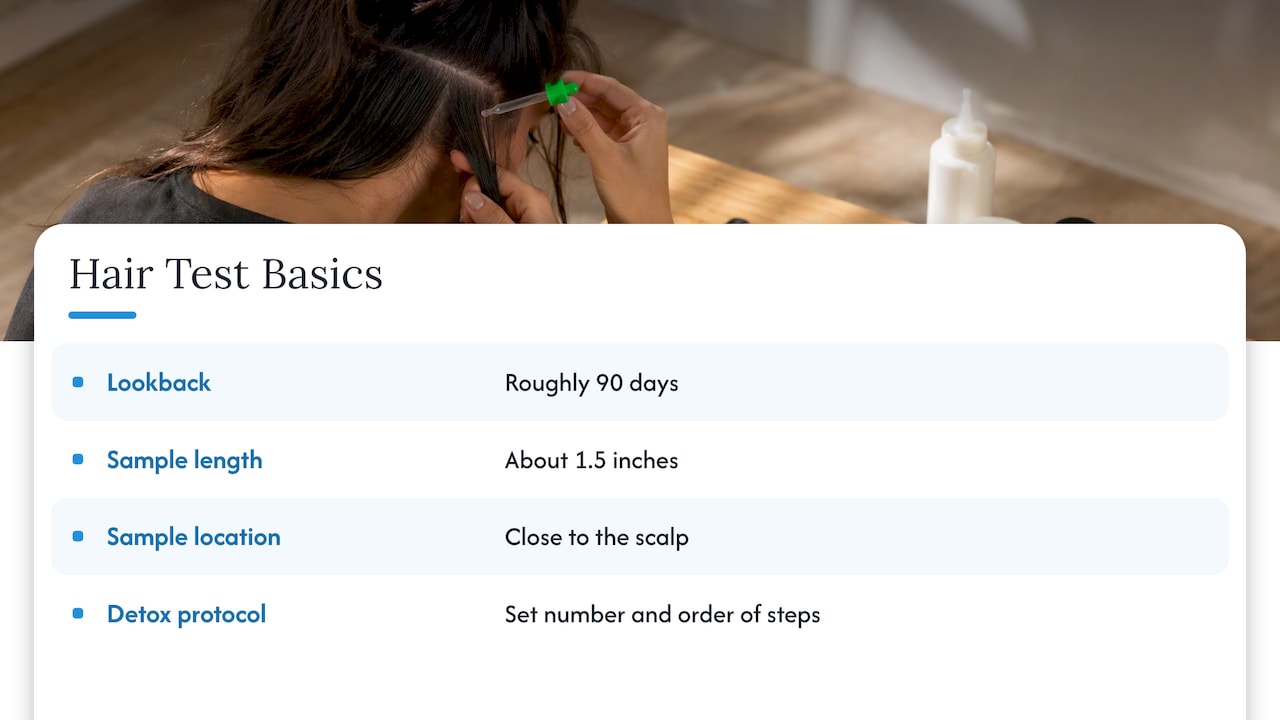
The test itself is straightforward. A standard hair follicle test covers roughly the previous 90 days, using about 1.5 inches of hair taken close to the scalp, according to a hair follicle testing overview from BlueHive. That is why one clean weekend does not change the picture, and why your history over the last three months matters more than the last few days.
If you want to know which substances are screened, we cover that in what drugs show on a hair follicle test. For how long different drugs remain, see how long drugs stay in your hair.
Which product to order
The product has to fit the exposure. Two methods exist at Macujo, and mixing them up is the most common ordering mistake.
| Old Macujo Method | Mike’s Macujo Method | |
|---|---|---|
| Designed for | Low-to-moderate THC exposure | High THC levels, other drugs and alcohol |
| Reported success rate | About 90% for moderate THC | Better than 99% when every wash and direction is completed correctly |
| Effect | Temporary masking | Hair stays clean unless drugs or alcohol are used again |
| Format | Older, shorter routine | Systematic nine-step process |
| Shampoo | Aloe Rid Old Formula | Authentic Macujo Aloe Rid® Shampoo |
Those success figures are our own reported results, not independent studies, and they apply when every required wash and direction is followed.
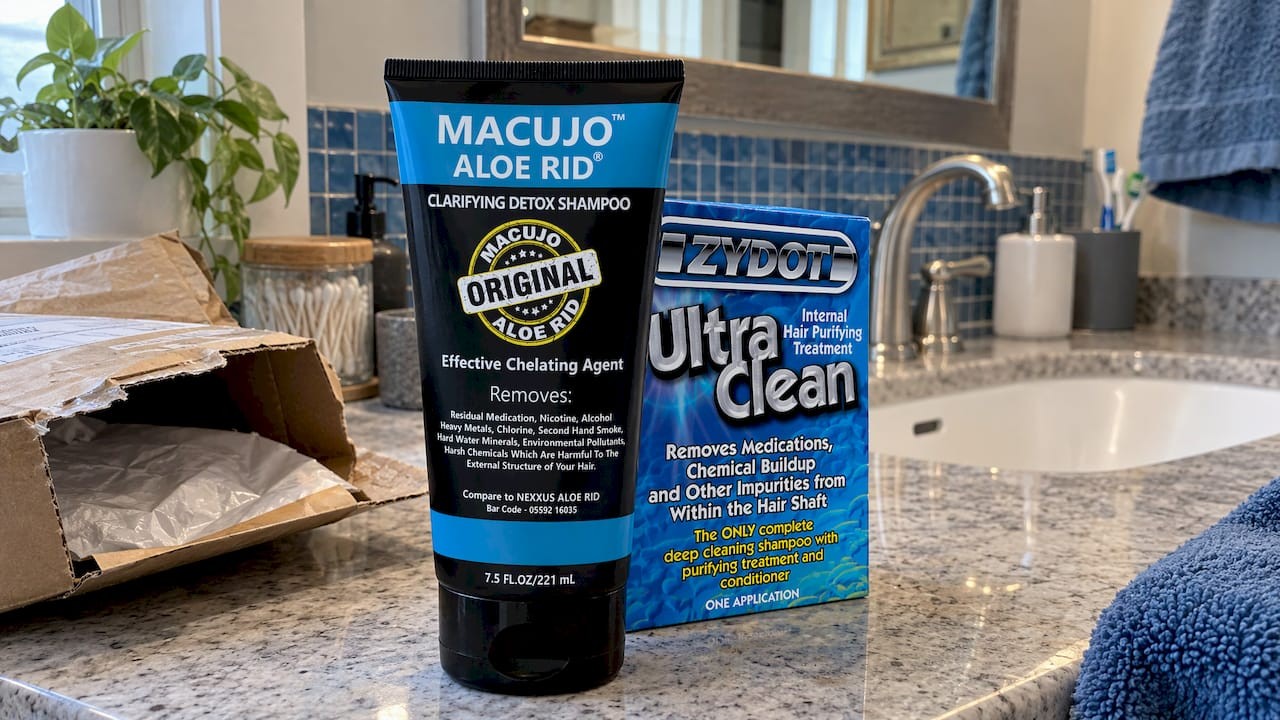
Mike’s Macujo Method, introduced in 2018, is our current standard. It must be completed with authentic Macujo Aloe Rid® Shampoo, so the first rule of ordering is to buy from the source and not from a look-alike listing. If you want the full range, start at the hair drug test products page or browse the hair detox kits and shampoos archive.
One set or two
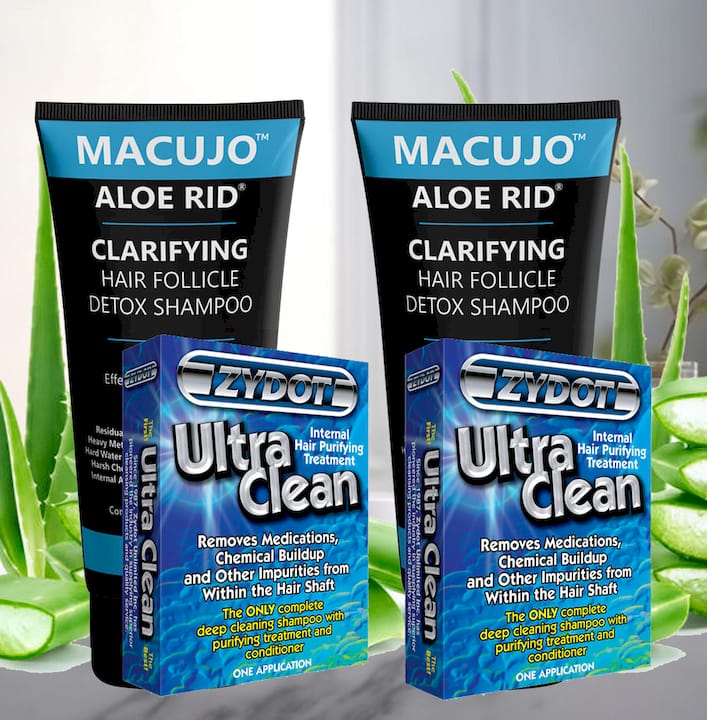
The number of washes your history requires decides how much product you need. Someone with light, infrequent exposure and a long gap since last use needs less than someone who used heavily through the whole 90-day window. Our Aloe Rid 7.5oz + Zydot kit is the single-set option. If your calculator result is high, or you have long or thick hair that uses product quickly, the two-set bundle keeps you from running short in the middle of the process.
Running out halfway is the worst outcome. Partial protocols do not give partial credit.
What the Old Formula shampoo costs
The Macujo Aloe Rid Old Formula Shampoo is listed at $100 to $150, depending on the item. The old formula suits low-to-moderate THC exposure. If you are not sure which side of that line you fall on, the safer move is to run your numbers first.
Work out your washes before you check out
Nobody should guess the number of washes. Mike’s Macujo Required Washes Calculator uses three inputs:
- The substance. THC, cocaine, opiates and others behave differently, and alcohol markers are a separate matter.
- Date of last use. More time since last use means less in the hair near the scalp that the lab will sample.
- Frequency over the previous 90 days. Daily use for three months is a different task than a few occasions.
Write these down honestly before you start. The calculator can only be as accurate as your answers. Underreporting your use to get a lower number is the surest way to end up short.
With your result in hand, count backward from your test date. Each wash has directions and timing, and the whole process needs to fit with room to spare. If your test is days away, the 48-hour hair detox plan lays out a compressed schedule. If you have a week, the seven-day hair detox gives you a more comfortable pace.
When to order
Order as soon as you know a test is coming. Employers often give very short notice, and a pre-employment hair test can come right after an offer letter. Practical reasons to order early:
- Shipping time. Delays happen. A package that arrives the night before the test is a package you cannot use properly.
- Time for a question. If something in the directions is unclear, you want hours to sort it out, not minutes.
- Time to repeat a mistake. A dropped bottle or a skipped step is recoverable if you have a margin and unrecoverable if you do not.
Do not cut or shave your hair as a shortcut. Under pre-employment rules, an insufficient sample because of extreme damage or shaving may be grounds for disqualification, and labs can fall back on other body hair. Preparing the hair you have is the route to take. If you have a hairstyle that complicates things, such as locs, read our guide on passing a hair follicle test with dreadlocks.
Wash day: order of steps
The exact sequence belongs to the method you ordered, and the directions in your kit come first. The general shape of the day is consistent:
- Set up before you wet your hair. Lay out fresh towels, a clean comb, a timer and your product. Wash your hands and clear the sink or shower of other hair products.
- Follow the step order exactly. Mike’s Macujo Method has nine steps, and the order is part of how it works. Do not swap steps, shorten contact times or add other products between them.
- Rinse thoroughly. Residue left on the scalp is a common cause of itching and flaking, and it adds irritation to a process that is already intensive.
- Dry gently. Pat, do not scrub. Rubbing wet hair hard with a towel can damage its structure, which is why hair care guidance recommends a soft cloth, such as a special hair towel or a soft T-shirt, over aggressive towel rubbing.
- Log it. Note the time and wash number so you never wonder later whether you did wash four or wash five.
If you want to see how a scalp-focused approach fits in, our page on scalp detox before a hair drug test covers it.
Clean towels, combs and bedding
People ask about clean towels after a hair detox, and the logic is simple: clean hair should only touch clean things. A towel that has been in the bathroom for a week, a brush full of old hair and product, or a pillowcase you have slept on for days all carry residue and oils. Hair that has just been through a long process should not be sitting on any of it.
A working routine:
- Towels. Use a freshly laundered towel for every wash, or a clean soft cotton T-shirt. Do not reuse the one from the previous wash unless it has been laundered.
- Combs and brushes. Wash them with hot water and soap before starting, or use a new comb. Skip brushes with old buildup.
- Hats, hoods and scarves. Anything touching your hair between washes should be freshly laundered.
- Hands. Wash them before touching your hair, particularly if you handle other products.
This is a hygiene routine, not a secret step. It costs a load of laundry and gives you the best chance to protect the work you have put in.
Sleeping after a hair detox
Sleeping is where many people lose track of the routine. You have just finished a wash, your hair is damp or newly dry, and you are tired. A few habits help:
- Put on a fresh pillowcase. Change it after each wash, not once for the whole process. If you are doing several washes over a few days, keep a stack ready.
- Go to bed with fully dry hair when possible. Damp hair against fabric is more likely to pick up whatever is on it. Air dry or use a low-heat setting, and keep the scalp comfortable.
- Do not add products. Skip oils, leave-in conditioners, styling gels and dry shampoo between washes unless your directions call for them. Other products on the hair are just another variable.
- Keep smoke away. If you smoke or vape, or live with someone who does, keep your hair out of that air. Exposure to smoke is a way to put substances back onto hair, which is the opposite of what you are working toward.
- Avoid shared bedding. If a partner or roommate uses the same sheets, a separate clean pillowcase for you is simple and sensible.
The point is not perfection. It is removing the obvious ways your clean hair meets something dirty.
Scalp comfort and safety
Intensive washing can leave a scalp tight, dry or irritated. Treat that seriously, because a sore scalp makes the rest of the process harder to complete.
- No physical exfoliants on a damaged scalp. Guidance in The New York Times hair-washing guide advises against scrubs on skin with broken areas, sores or lesions. If your scalp has any of these, stop and see a doctor or dermatologist before continuing.
- Do a patch check if you have sensitive skin. If you have a history of reactions to shampoos, try a small amount on your inner forearm before you commit to a full wash.
- Stop if something burns or swells. Rinse thoroughly and contact a physician. Hives, swelling of the face or trouble breathing need emergency care.
- Keep products out of your eyes. Rinse with plenty of water if they get in.
If you are pregnant, on medication for a skin condition, or have a scalp disorder such as psoriasis or eczema, ask your doctor before using any intensive cleansing product.
A note on rehab and monitored testing
Some tests come from treatment programs or legal requirements, not employers. Those can have different schedules and a repeat-testing rhythm. Our guide to rehab hair drug tests and the 90-day window explains how to prepare in that situation. Laboratories also continue to discuss hair manipulation, and a 2025 toxicology review notes there is no routine standardized workflow for screening for it. That is a reason to follow the protocol exactly and not improvise.
Our perspective
We have helped people prepare for hair follicle tests since around 1999, and the same pattern shows up in the orders that go wrong: a late order, a guessed number of washes, or a different shampoo swapped in because it was closer or cheaper.
That is why we built Mike’s Macujo Method around a calculator and a fixed nine-step sequence. The number of washes is not a feeling. It comes from the substance, the date of last use and your use over the previous 90 days, and the method is designed to be completed with authentic Macujo Aloe Rid® Shampoo.
We also know that a protocol is only as good as the person following it. That is why we offer unlimited support and after-hours phone consultation: so that when it is late, your test is close and a question comes up, you can ask it and get a real answer from a person.
If you take one thing from this page, make it this: order early, calculate honestly, follow every step and protect your clean hair afterward.
MIchael
Ready to order
If your test date is set, start with the calculator, pick the kit that matches your result, and place your order with time to spare. The Aloe Rid 7.5oz + Zydot kit is a good place to start for a single set, and the Afterhours Personal Consultation at $100 lets you talk through your history, your timeline and your questions with an expert before you commit. Our consultation guide explains what to prepare for the call.
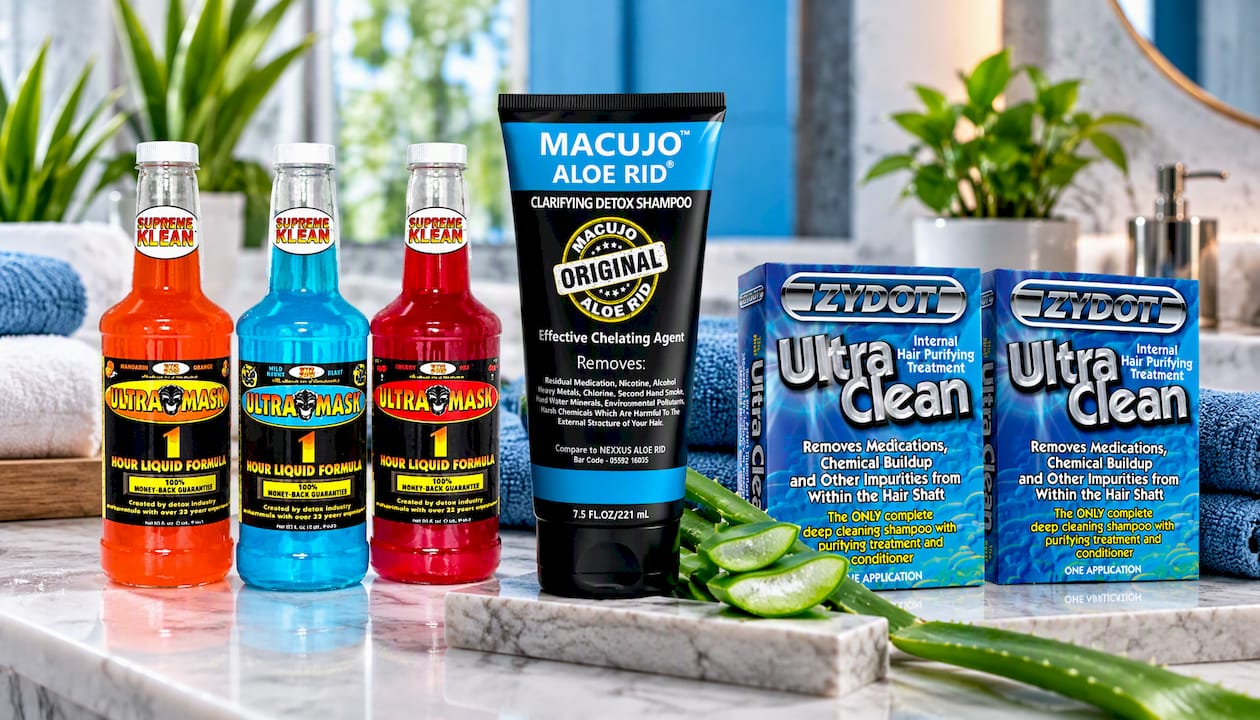
If you also need support for a urine or saliva test, those products are available from the Macujo shop.
FAQ
How far back does a hair drug test look?
A standard hair follicle test covers about 90 days, using roughly 1.5 inches of hair near the scalp, as BlueHive explains. That is why your use over the full three months matters when you work out how many washes you need.
How many washes do I need?
It depends on the substance, your date of last use and how often you used during the previous 90 days. Mike’s Macujo Required Washes Calculator takes those three inputs and gives you a number. Do not guess, and do not stop early.
Should I use a clean towel for every wash?
Yes. A freshly laundered towel or a soft cotton T-shirt keeps residue away from clean hair, and gentle patting is better than rubbing hard. The same goes for combs, hats and pillowcases.
Can I order a consultation instead of a kit?
Yes. The Afterhours Personal Consultation costs $100 and is useful when your history is complicated, your test is close or you are unsure which method fits. Many people book it first and then order their kit.
What if my scalp becomes irritated?
Rinse thoroughly, pause, and avoid scrubbing. If there are open sores, swelling or a rash that does not settle, see a doctor or dermatologist before you continue.
Sources
- Hair Follicle Drug Test: Detection Window and Procedure, BlueHive
- Drug Testing, Community Services of Missouri
- How to Wash Your Hair: Methods for Your Hair Type, Verywell Health
- How to Wash Your Hair, The New York Times
- Review on Toxicology Testing in Hair, The Journal of Applied Laboratory Medicine